
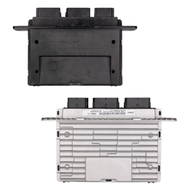
2011-2016 Ford 6.2L PCM Symptoms, Repair, and Replacement
29th Jan 2026
If you own a 2011 to 2016 Ford F-250 or F-350 Super Duty equipped with the 6.2L V8 engine, you've probably heard stories about PCM problems in online forums or from fellow truck owners. The PCM (Powertrain Control Module), acts as the brain for your truck's engine and transmission. When it starts to fail, the symptoms can range from annoying to completely debilitating. Understanding what causes these failures, how to recognize them, and what your repair options are can potentially save you thousands of dollars and countless hours of frustration.
What is a 6.2L PCM and What Does It Do?
The powertrain control module is essentially a dedicated computer that monitors and controls every aspect of your engine's operation in real time. Think of it as the conductor of an orchestra, coordinating fuel injection timing, ignition coil firing, valve timing adjustments, throttle body positioning, and hundreds of other functions that keep your engine running smoothly. The PCM receives input from dozens of sensors throughout the engine bay and uses that data to make split-second decisions about how much fuel to inject, when to fire each spark plug, and how to adjust the engine's operation based on current conditions.
In the 2011-2016 Ford Super Duty trucks, the PCM has a particularly demanding job. This naturally aspirated V8 produces respectable power and torque figures, but it generates significant heat and requires precise control of both the fuel injection system and the ignition system. Each of the eight cylinders needs its fuel injector commanded at exactly the right moment, and each cylinder requires two spark plugs fired by separate ignition coils. That's 16 spark plugs and 8 ignition coils, all controlled by driver circuits within the PCM.
The Common Failure Pattern in 6.2L PCMs
The most widespread problem affecting these PCMs involves the internal driver circuits that control the fuel injectors and ignition coils. Inside the PCM, there are dedicated electronic drivers for each injector and each coil. These drivers handle high electrical current, switching power on and off thousands of times per minute. Over time, particularly under the heat and stress of heavy-duty truck operation, these driver circuits can degrade or fail completely.
What makes this failure particularly frustrating is that it often manifests as seemingly random misfires or multiple cylinder issues. You might replace ignition coils and spark plugs only to find the problem persists. That's because the root cause isn't the coil or the injector itself, but rather the PCM's inability to properly control those components. The circuit board inside the PCM develops weaknesses in specific areas where these high-current drivers are located. Components can overheat, and connections can break.
The failure typically affects either the injector control circuits or the ignition coil control circuits, though in some cases both systems can be compromised. When an injector driver circuit fails, the PCM cannot properly pulse that cylinder's fuel injector, leading to a lean condition or complete lack of fuel delivery to that cylinder. When an ignition coil driver fails, the coil doesn't receive the proper signal to fire, resulting in no spark and an unburned air-fuel mixture.
Recognizing the Symptoms of 6.2L PCM Failure
The check engine light is usually your first indication that something is wrong. When you scan for diagnostic trouble codes, you'll typically see a pattern of codes related to ignition coil circuits or injector circuits. For ignition coil failures, you'll encounter codes like P0351 through P0358, each corresponding to a specific cylinder's coil circuit. For injector circuit failures, the codes range from P0201 through P0208.
Injector Codes: P0201, P0202, P0203, P0204, P0205, P0206, P0207, P0208
Ignition Coil Codes: P0351 P0352, P0353, P0354, P0355, P0356, P0357, P0358
What distinguishes a PCM driver failure from an actual coil or injector failure is the behavior when you try to diagnose the problem. If you swap a "bad" coil with one from another cylinder and the code doesn't follow the coil, that's a strong indicator the PCM driver is at fault. Similarly, if you test an injector's resistance and it measures correctly, yet the truck still throws an injector circuit code, the problem likely lies in the PCM's ability to command that injector.
Beyond the check engine light and trouble codes, you'll notice real-world driving symptoms. The truck may idle roughly, feeling like it's running on fewer than eight cylinders. Under acceleration, you might experience a hesitation or stumble, particularly when the engine is under load.
Why Do These PCMs Fail?
Several factors contribute to PCM failures in the 6.2L Super Duty trucks. The primary culprit is heat. These trucks are often used for heavy towing, hauling, and other demanding work that generates significant engine bay temperatures. The PCM is mounted on the driver's side fender area, and while it's designed to handle heat, years of exposure to extreme temperature cycles take their toll on the electronic components inside.
The driver circuits themselves handle high electrical current, which generates additional heat internally. Modern ignition coils require substantial current to create the high voltage needed for spark generation, and fuel injectors also draw significant current during their rapid opening and closing cycles. Over time, this constant heating and cooling causes solder joints to crack, capacitors to dry out, and semiconductor components to degrade.
Diagnosing PCM Problems vs. Other Issues
Before condemning your PCM, it's important to rule out other potential causes of similar symptoms. Start with the basics. Check your spark plugs and ignition coils, particularly if your truck has more than 60,000 miles. Ford recommends changing spark plugs at 60,000-mile intervals on the 6.2L, and ignition coils do fail independently of PCM issues. When a spark plug becomes worn or fouled, it requires more voltage to fire, which stresses both the coil and the PCM driver circuit.
Inspect all wiring harnesses and connectors, paying special attention to the areas where the harness makes contact with sharp edges or hot engine components. Look for signs of chafing, melting, or corrosion. A broken wire or corroded connector can produce the same trouble codes as a failed PCM driver, but the fix is much simpler and cheaper.
Check the condition of your fuel injectors. While less common on the 6.2L than on some other engines, injectors can become clogged with deposits or develop internal failures. You can perform an injector balance test or have a shop do this for you. If one injector shows significantly different flow characteristics than the others, that injector may need replacement or cleaning.
Once you've eliminated these other possibilities and you're still seeing multiple injector or coil circuit codes, especially if they affect non-adjacent cylinders or if the codes persist after replacing the actual coils or injectors, the PCM becomes the prime suspect.
Understanding Your Repair Options
When faced with a confirmed PCM failure, you have two main options: buying a new PCM from the dealer, or having your existing PCM repaired.
The dealership route is the most expensive by far. A new Ford PCM for these trucks can cost over $1000 for just the part in some cases. Then you'll need to factor in programming costs. The programming is necessary because the PCM needs to be married to your specific vehicle's VIN and needs to have the correct calibration files loaded. The biggest downside to this approach is that you’re getting a part with the same problematic components and weak connections.
The repair option is increasingly popular and offers several advantages. Specialized electronic repair shops can rebuild your existing PCM by replacing the failed driver components on the circuit board. The major benefit here is that your original PCM retains its programming and calibration specific to your truck, eliminating the need for dealer programming in most cases. This is truly plug-and-play repair work. Circuit Board Medics offers this service for much a much lower price than a replacement. This repair includes a one-year warranty – much higher than most replacement warranties.
Why Repair a 6.2L PCM?
Not all PCM repairs are created equal. A quality repair should address not just the specific components that have failed, but also upgrade the surrounding circuitry to prevent future failures. The best repair services use improved components that exceed original equipment specifications, with better heat tolerance and higher current ratings. They also upgrade other known weak points on the circuit board, even if those components haven't failed yet.
Turnaround time is another consideration. Circuit Board Medics completes PCM repairs in just one business day. This is significantly faster than ordering a replacement PCM from the dealer, which can take a week or more if the unit isn't in stock.
The warranty matters as well. This demonstrates confidence in the repair quality. Make sure you understand what the warranty covers. It should include parts and labor for any failure of the repaired circuits, though damage from external causes like water intrusion or electrical surges typically isn't covered.
Do You Need to Program a 6.2L PCM?
One of the biggest questions truck owners have is whether a repaired or replacement PCM will need programming. The answer depends on what route you take. When you have your original PCM repaired, the unit retains all of its original programming, including your VIN, your specific calibration files, and any updates that were previously installed. This means you can simply reinstall it and go, truly making it a plug-and-play solution.
If you purchase a new PCM, programming is almost always required. This typically involves extra cost and time to complete.
Long-Term Reliability After Repair
One common question is whether a repaired PCM will last as long as a new unit. The answer is that a quality repair using upgraded components should actually outlast the original design. Remember, the original PCM used components that proved to be inadequate for the application. A proper repair replaces those weak components with better ones. It's not uncommon for repaired PCMs to outlive the vehicles they're installed in.
The 6.2L engine itself is generally reliable when maintained properly. Once the PCM issue is resolved, you can expect many more years of service from your truck. Many owners report going well over 200,000 miles on these engines after addressing the PCM problems.
Conclusion
If you're experiencing the symptoms described, and diagnostic testing points to a PCM failure, it’s important to know your options. For most owners, having the existing PCM professionally repaired offers the best combination of cost savings, convenience, and reliability. The repair addresses the root cause of the failure while upgrading the vulnerable components, and you avoid the programming hassles associated with a replacement unit.
Don't let a failing PCM sideline your truck for long. With the right information and the right repair approach, you can solve this problem affordably and get back on the road. If you’re in need of a PCM repair, you can visit our 6.2L PCM repair page here. If you have any questions, or would like some help troubleshooting your vehicle, you can give us a call at (800) 547-2049. We look forward to serving you.